A steady flow of air
A CPAP machine produces a flow of air and sends it through tubing to a mask.

CPAP can take a little getting used to. This guide explains what the machine does, the parts you use, the main mask types and what you can try when something is not feeling right.
Have a ResMed CPAP report? Try our new report-explainer prototype. It extracts the key numbers from your report in your browser so we can test the system before adding the AI explanation.
CPAP stands for Continuous Positive Airway Pressure.
A CPAP machine produces a flow of air and sends it through tubing to a mask.
The pressure helps prevent the upper airway from narrowing or closing during sleep.
For obstructive sleep apnoea, CPAP is normally worn whenever you sleep, including naps where advised by your clinical team.
Think of the system as a simple path from the machine to your airway.
The machine generates the airflow at the pressure or pressure range prescribed for you.
The tubing carries the airflow from the machine towards the mask. Some systems use heated tubing.
The mask delivers the airflow to your nose, or to your nose and mouth, helping keep the airway open.
Understanding the physiology can make CPAP feel much less mysterious. In obstructive sleep apnoea (OSA), the airway becomes narrow or closes during sleep. Your brain then reacts and breathing starts again.
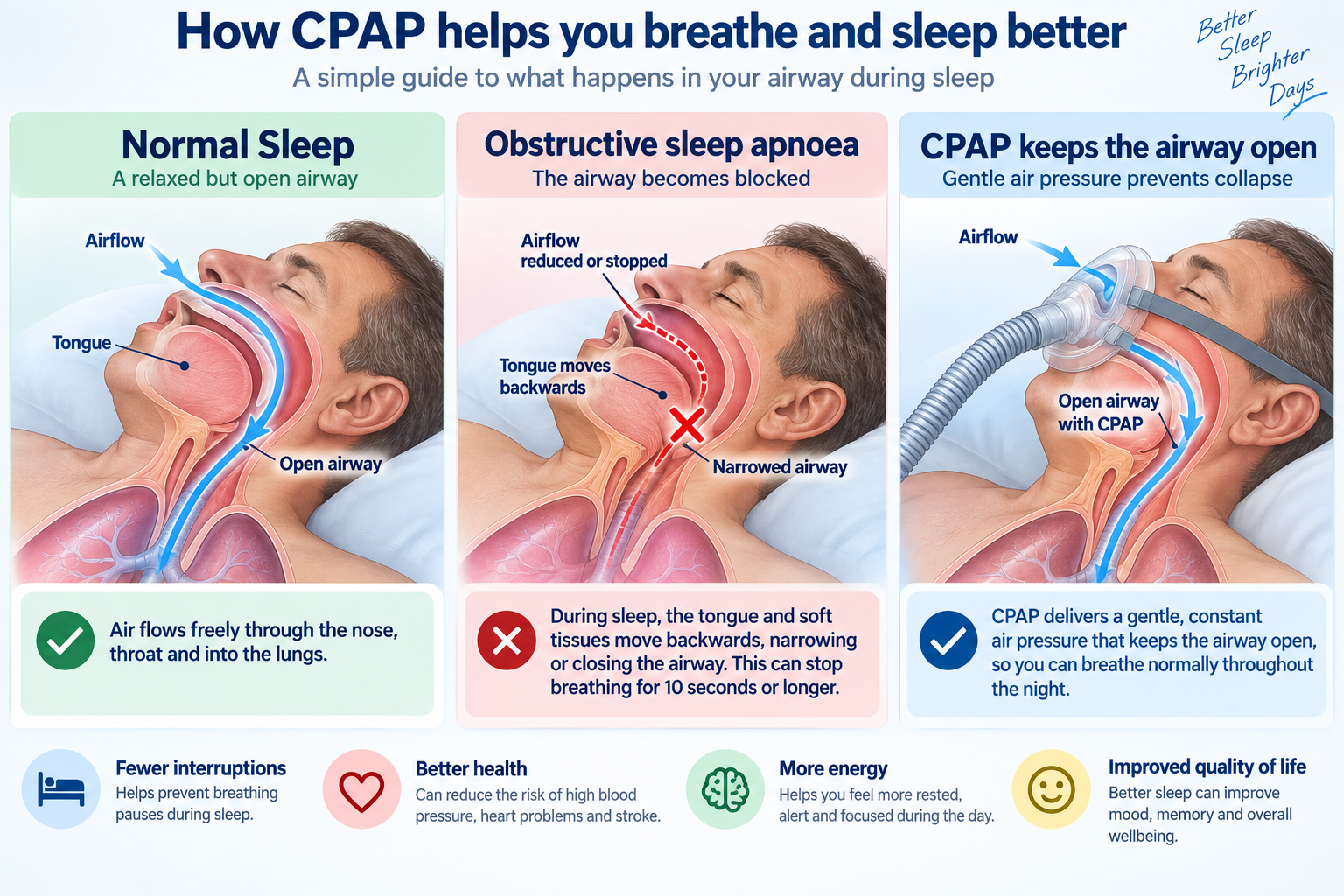
The muscles that help hold the throat open naturally relax during sleep. For most people, the airway remains open.
In OSA, the relaxed tissues of the upper airway can narrow or collapse. Airflow becomes restricted or stops.
Oxygen can fall and carbon dioxide can rise. The brain briefly increases the drive to breathe and may cause a brief arousal, often without you remembering it.
CPAP provides positive pressure through the mask. This acts like an air splint, helping keep the upper airway open while you sleep.
These numbers are here to give you context. They are population-level figures, not a prediction about any one person.
Population studies generally find OSA is around two to three times more common in men than women. The difference becomes smaller after menopause.
Age is an important risk factor. The HSE notes that OSA is more common over 40, although it can occur at any age.
An AHI of 5 or more events per hour is commonly used to define OSA on a sleep study, with symptoms and the clinical picture also considered.
For adults, an AHI over 30 is generally classed as severe OSA. A sleep service interprets the result alongside your symptoms and other findings.
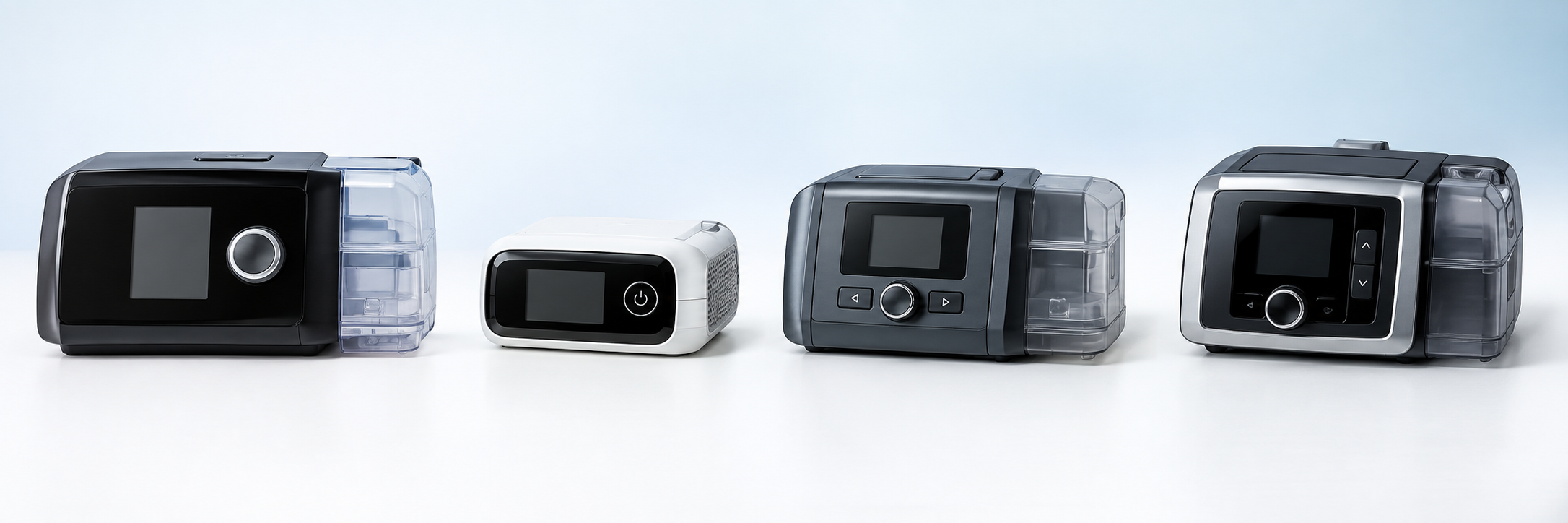
There are several types of positive airway pressure devices. Your sleep service will choose the type that is appropriate for you.
Provides a fixed pressure that stays at the set level.
Can adjust pressure within a prescribed range as your needs change during sleep.
A compact device designed to make taking treatment away from home easier.
Uses different pressures for breathing in and breathing out and is used for selected patients and conditions.
The machines shown are illustrative examples rather than recommendations. Exact features vary by manufacturer and model.
Knowing the names of the parts makes it easier to explain a problem when you contact your sleep service or equipment provider.
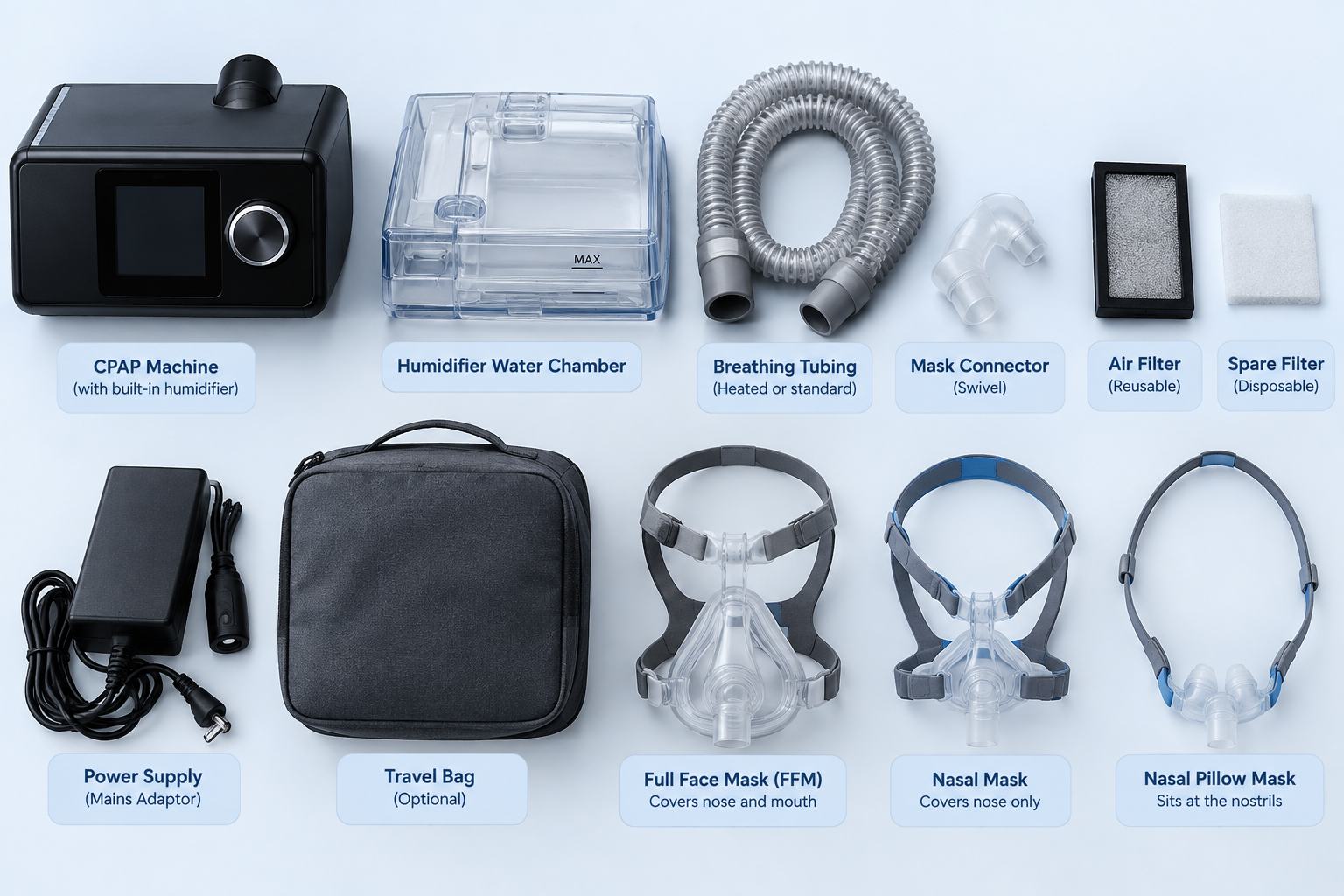
Creates and controls the airflow.
Adds moisture to the airflow on systems fitted with humidification.
Carries air from the machine to the mask. It may be standard or heated.
Connects the tubing to the mask and allows movement.
Help keep dust and particles out of the airflow. Follow your manufacturer's replacement guidance.
Provides electrical power to the machine.
The right mask depends on comfort, breathing pattern, mouth opening and other individual factors. A good seal is important, but the mask should not be painfully tight.
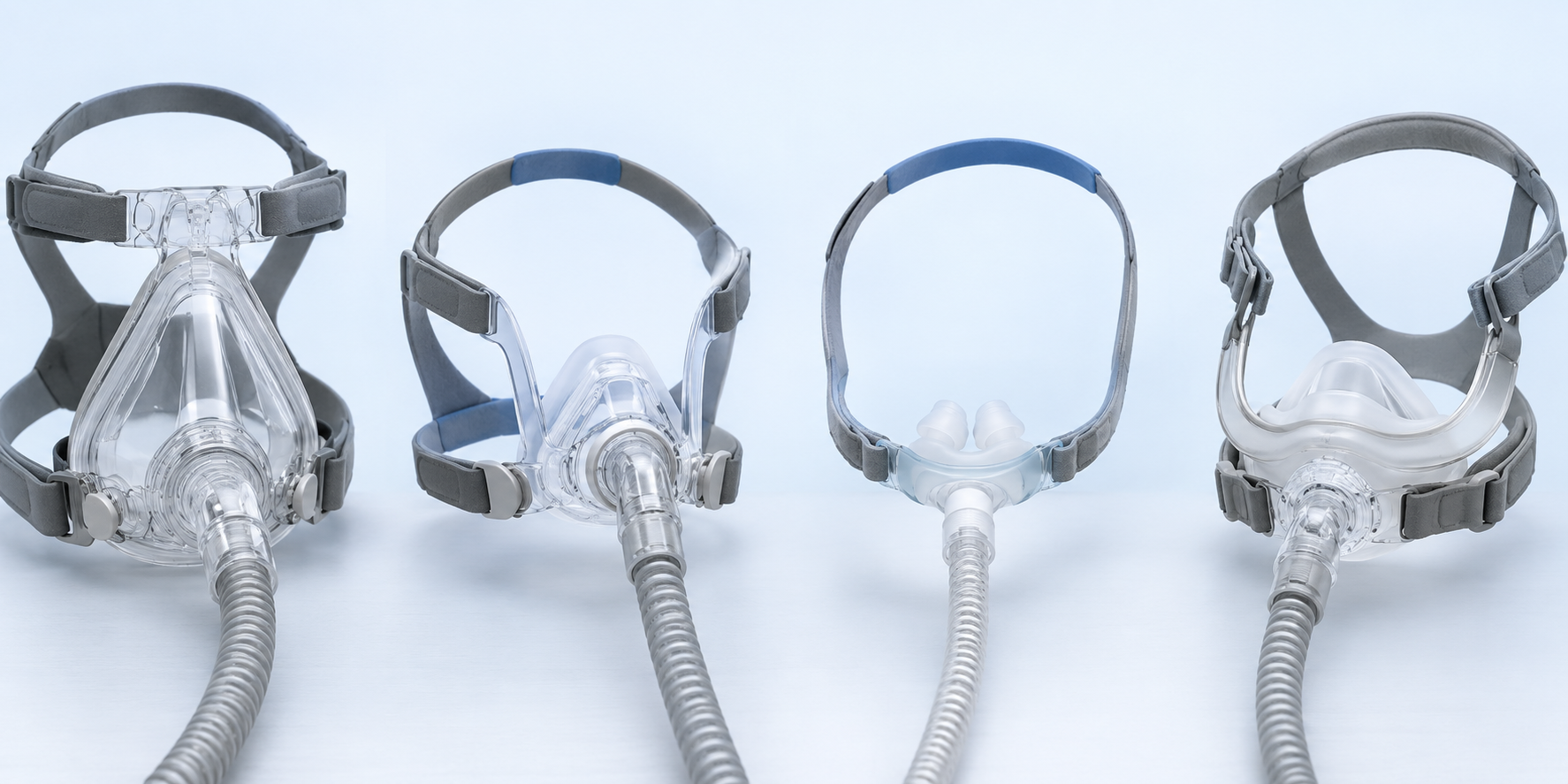
Covers the nose and mouth. It may be useful when treatment needs to be delivered through both or when mouth breathing is a significant issue.
Sits over the nose. It is a common option for people who are comfortable breathing through the nose during sleep.
Uses small cushions at the nostrils. It has less material over the face and can suit some people who prefer a minimal design.
Combines features from different designs and can sit under the nose while also providing mouth coverage in some models.
Common problems are often fixable with a mask adjustment, a different mask, humidification or help from your sleep team.
Contact your sleep service or CPAP provider if you are struggling with comfort, repeated leaks, persistent dryness, equipment problems or if you are unsure whether your treatment is working as expected.
Do not change your prescribed treatment settings yourself unless your clinical team has advised you to do so.